
Why Mining Hot Rolled Steel Balls Reduce Breakage in SAG and Ball Mill Circuits
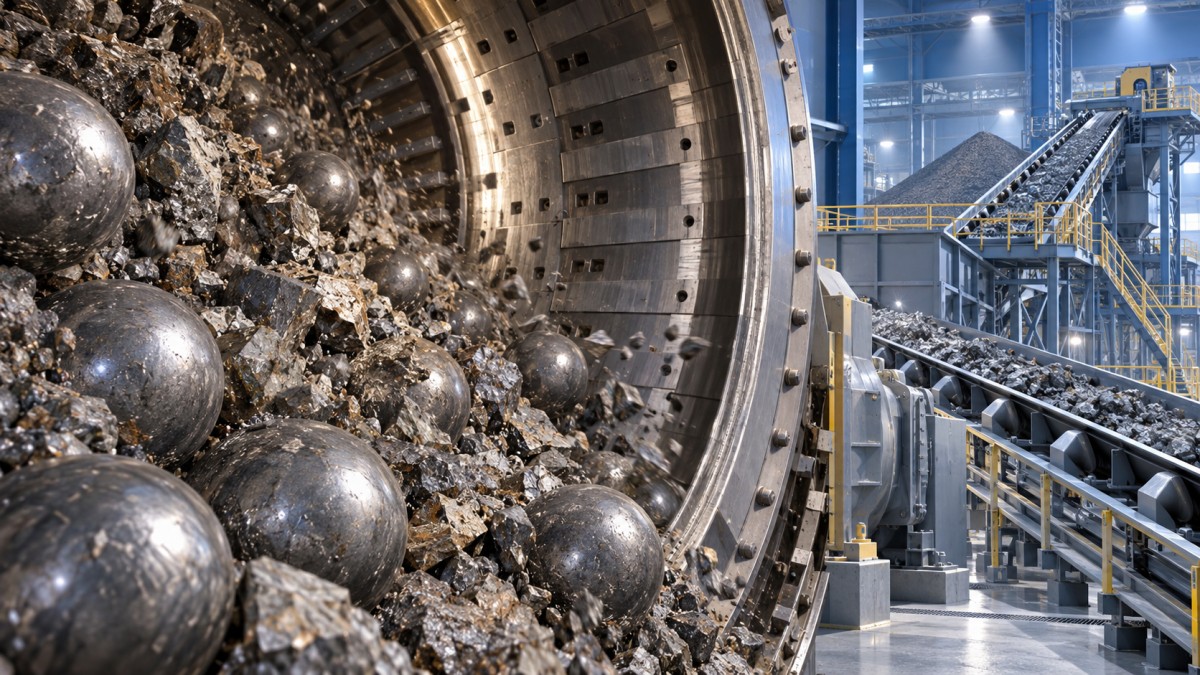
In SAG and ball mill circuits, premature media breakage is rarely an isolated materials issue. A cracked or fragmented ball can alter the grinding charge, reduce effective impact energy, create unplanned inspection work, and make it harder to hold a stable throughput target. For project managers responsible for ramp-ups, expansions, or reliability improvement programs, mining hot rolled steel balls are often a practical part of the answer: they are designed to withstand repeated high-energy impacts while retaining the hardness needed to grind abrasive ore.
The objective is not simply to buy balls with a high hardness reading. A grinding media program must balance hardness, core toughness, size distribution, ore characteristics, and mill operating conditions. When those factors are aligned, media breakage becomes more controllable, liner and grate risk can be reduced, and the mill charge can perform closer to its intended design.
Why breakage matters more in SAG and primary ball milling
SAG mills subject grinding media to a punishing combination of conditions. Large ore pieces, high lift heights, cascading and cataracting charge motion, and occasional overload events all create concentrated impact forces. In a ball mill, the dominant mechanism may shift toward abrasion and repeated compressive loading, but impact remains important—particularly near the feed end or when coarse material reaches the mill.
When a ball breaks, the problem extends beyond the cost of replacing that individual piece. Fragments may contribute less useful grinding work than a correctly sized ball. They can change the charge’s size profile, increase the amount of undersized media, and complicate downstream separation. In severe cases, abnormal breakage can be associated with screen blockage, discharge issues, damage risks for pumps and cyclones, or a sudden decline in milling stability.
That is why engineering teams should evaluate breakage as a circuit-performance risk rather than a purchasing-line-item issue. A lower initial media price can be quickly offset if the product produces excessive fragments, requires more frequent topping up, or makes the mill harder to operate consistently.
How hot rolled manufacturing supports resistance to fracture
Mining hot rolled steel balls are formed from heated steel bar stock through a controlled rolling process, then subjected to heat treatment. The process matters because a ball is expected to carry a hard, wear-resistant working surface without becoming brittle at its core.
A properly engineered result combines several properties:
- Surface hardness to resist abrasive wear from quartz, hard rock, and other mineral constituents.
- Core toughness to absorb repeated impact loads without brittle cracking.
- Structural consistency so the response to impact is predictable from ball to ball.
- Dimensional control to support a stable and intentional mill charge mix.
The key distinction is not “hard versus soft.” Extremely high hardness without sufficient toughness can raise the risk of spalling or catastrophic fracture under impact. Conversely, a ball that is too soft may survive impact but wear away too rapidly, losing diameter and grinding efficiency before it has delivered acceptable service. Hot rolled grinding media is valued in demanding mining applications because it can be designed around this necessary balance.
What project teams should verify before approving a media supply
It is tempting to specify grinding media by diameter and a single hardness number. That approach is incomplete. A more useful technical review asks how the product will behave in the actual circuit.
1. Match ball size to the grinding duty
Larger diameters generally provide greater impact energy and are commonly required where feed is coarse or the SAG mill charge must break competent ore. Smaller balls provide more contact points and can be beneficial as particle size decreases. The right makeup schedule is therefore tied to feed-size distribution, mill diameter, liner design, target grind, and the existing charge. Adding large balls to solve every problem may increase impact but can reduce the number of grinding contacts needed for fine-size reduction.
2. Look beyond nominal chemistry
Steel grades and alloying elements influence hardenability, wear behavior, and toughness, but a chemistry sheet alone does not prove field performance. Carbon, manganese, chromium, boron, and other elements must work with rolling and heat-treatment control. Ask suppliers how raw materials are controlled, how heat treatment is monitored, and what inspections are conducted on finished balls. The response should describe a process, not merely repeat a grade name.
3. Request evidence relevant to breakage risk
For high-impact duties, impact toughness and hardness profiles are especially relevant. As an example, available media can be specified with surface hardness levels above 55 HRC, 58 HRC, or 60 HRC depending on the design, together with impact toughness requirements such as at least 12 J/cm². These figures should not be treated as universal purchasing targets; they must be assessed against ore abrasiveness, mill operating mode, and the supplier’s proven process capability.
4. Confirm diameter tolerance and charge consistency
A nominal 100 mm ball is not interchangeable with any product labeled “100 mm.” Tolerance affects charge behavior, media sorting, and the accuracy of makeup calculations. For projects requiring a broad media range, confirm which sizes are available—from 20 mm through 150 mm, for example—and obtain the relevant tolerance specification for each diameter band. This is particularly important during commissioning, when charge composition is being established and operators need predictable results.
A practical way to investigate recurring ball breakage
If breakage is already visible in the circuit, do not assume the media is solely at fault. The fastest path to a useful decision is usually a structured review of both the balls and the operating environment.
- Collect and classify fragments. Record their size, shape, fracture appearance, and the mill area where they were found. A clean brittle-looking fracture may point to a different issue than progressive surface spalling.
- Review operating history. Compare breakage events with feed hardness changes, mill power, charge level, liner condition, startup practices, and any periods of mill overload.
- Check the actual makeup mix. Verify whether the delivered size distribution matches the plan and whether the mill has accumulated too much small or worn media.
- Evaluate representative samples. Hardness, impact testing, diameter checks, and metallographic examination can help distinguish material inconsistencies from application-related damage.
- Run a controlled trial where possible. Introduce a defined media batch, maintain clear records, and compare wear, breakage, and mill indicators over a meaningful operating interval.
This approach avoids a common mistake: changing media supplier without correcting an underlying mill condition. At the same time, it prevents operations teams from accepting abnormal breakage as “normal” simply because the circuit is difficult.
Choosing between hot rolled and cast media in a broader grinding plan
Not every part of a comminution circuit has the same duty. Hot rolled balls are commonly considered for high-impact mining environments where toughness is central to the selection. Cast media may also be evaluated in applications where operating conditions, wear mechanisms, and economic priorities differ. The important point is to avoid treating all grinding media as interchangeable.
For teams reviewing alternatives across mining, cement, power generation, or mineral processing duties, Casting balls may be included in a broader media assessment. Such a review should compare the product route, intended application, hardness and toughness data, diameter range, and observed circuit behavior—not just purchase price per tonne.
From a media purchase to a reliability decision
The most effective procurement conversations begin with operating data. Share ore type, feed size, mill dimensions, target product size, liner configuration, typical charge level, and historical wear or breakage observations. A supplier with mining technical-service capability can then recommend a more suitable material grade, size range, and inspection plan rather than offering a generic ball for every mill.
Shandong Jinchi New Material Technology Co., Ltd. supports grinding media selection with products including grinding steel balls, rods, and cylpebs, backed by raw-material controls, automated production, heat-treatment management, and laboratory inspection. For project leaders, this kind of supplier engagement is valuable when the goal is not merely to replenish inventory, but to establish a more reliable grinding-media standard for the circuit.
Ultimately, mining hot rolled steel balls reduce breakage when their hardness, toughness, manufacturing consistency, and size are matched to the real impact environment inside the mill. That match protects more than the media itself. It supports steadier throughput, more predictable maintenance planning, and greater confidence that the grinding circuit can meet the production plan under demanding conditions.
Get real-time quotes
Interested? Leave your contact details.