
news
Forged Steel Balls for Gold Mining
Forged Steel Balls for Gold Mining
Forged steel balls for gold mining directly influence mill throughput, grinding efficiency, media consumption, and ultimately the consistency of downstream gold recovery.
For mine operators, the best choice is rarely the lowest-priced ball. It is the media that delivers predictable wear, sufficient impact resistance, and stable mill performance.
Shandong Jinchi New Material Technology Co., Ltd. supplies grinding media and technical support designed to help mining operations improve milling control and manage total operating cost.
Why Grinding Media Quality Matters in Gold Milling
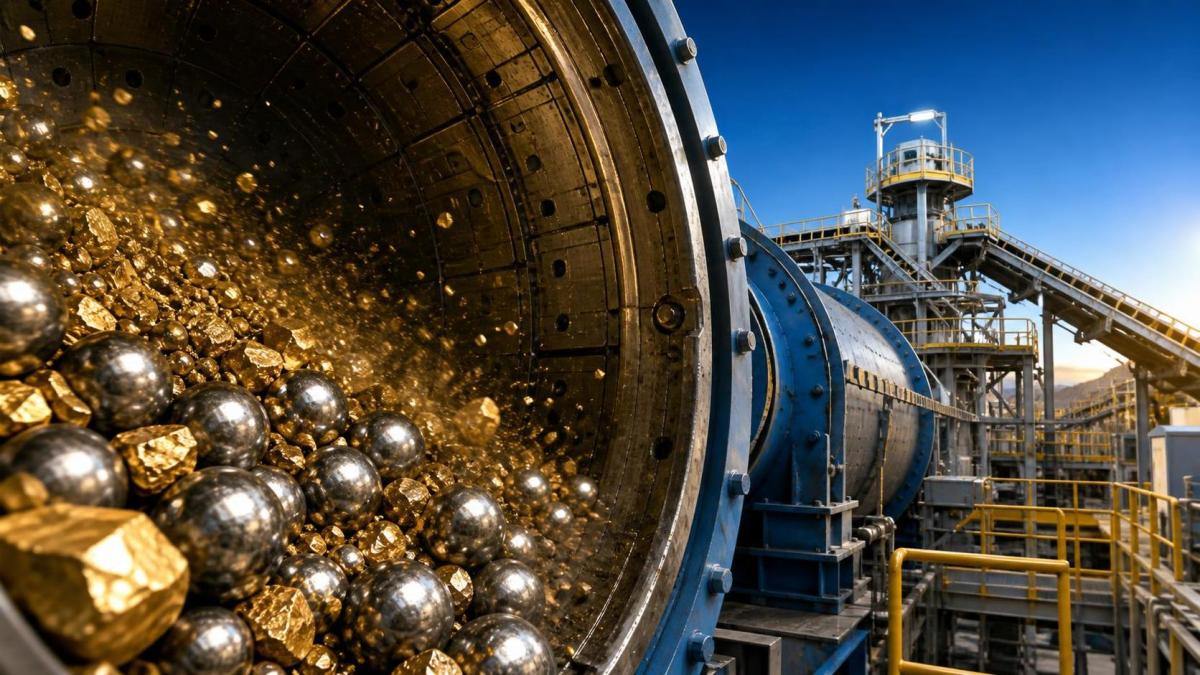
Gold ore processing depends on reducing valuable mineral-bearing particles to a size suitable for liberation, flotation, cyanidation, gravity separation, or other recovery methods.
In a ball mill, grinding media transfers energy to ore particles through impact and abrasion. Media quality therefore affects every stage following comminution.
Poorly performing balls can wear too quickly, break prematurely, or lose hardness unevenly. These issues change the grinding environment and increase replacement frequency.
When ball size distribution becomes unstable, mills may produce a coarser or more variable product. That can reduce liberation and make recovery results harder to control.
High-quality forged media is especially valuable in demanding primary grinding applications, where repeated impact requires a balance between hardness, toughness, and structural integrity.
The goal is not simply to use harder balls. Excessive hardness without adequate toughness can increase breakage risk under high-impact milling conditions.
Conversely, media that is too soft may flatten or wear rapidly. More steel is consumed, and the mill requires frequent top-ups to maintain charge behavior.
For this reason, gold mines should evaluate grinding balls as a process input with measurable operational consequences, rather than as a routine consumable purchased only by unit price.
Reliable media supports a more stable grinding circuit, helping operators maintain target particle size while reducing avoidable disruptions caused by inconsistent ball performance.
The resulting benefit can include lower media consumption, fewer unplanned adjustments, improved mill availability, and better conditions for downstream gold extraction.
What Gold Mine Operators Should Evaluate Before Buying
Procurement teams should begin with ore characteristics, mill type, operating conditions, and target grind size. A suitable ball for one circuit may not suit another.
Ore hardness, abrasiveness, feed size, slurry density, mill speed, and liner design all influence the wear mechanism acting on grinding media.
Primary ball mills usually require larger diameters to deliver sufficient impact energy. Secondary or regrind mills often need smaller balls for finer particle reduction.
Available sizes from 20 mm to 150 mm allow operators to build a charge that matches feed conditions and required product fineness.
A practical review should include the mill’s existing ball size distribution. Replacing media without considering charge composition can limit the expected improvement.
Operators should also ask whether the supplier can recommend initial loading and ongoing top-up sizes. This support is valuable when ore conditions change.
Wear rate should be measured in relation to tonnes processed, not merely calendar time. Consumption per tonne offers a clearer comparison between media options.
Breakage rate is equally important. Broken balls may alter mill dynamics, increase removal work, and create safety or equipment-handling concerns.
Material chemistry, heat treatment consistency, surface hardness, impact toughness, and dimensional tolerance should all be reviewed alongside commercial terms.
A technically credible supplier will provide relevant test data and discuss how the product will perform under the customer’s actual milling environment.
How Forging and Heat Treatment Affect Service Life
Forging improves the internal structure of steel by shaping the material under controlled force. This can support a denser, more uniform grain flow.
For grinding applications, that structural consistency matters because balls experience repeated high-energy collisions with ore, liners, and other grinding media.
Heat treatment then determines the relationship between surface hardness, core hardness, wear resistance, and impact toughness. Each property must be managed carefully.
A hard surface helps resist abrasive wear, while a tough core helps the ball absorb impact energy. Both characteristics contribute to longer usable life.
Suitable process control reduces the risk of surface cracking, internal defects, uneven hardness, and premature fragmentation during high-load milling operations.
Typical technical requirements may include surface hardness above 60 HRC and impact toughness of at least 12, depending on grade and application conditions.
Controlled chemistry also contributes to performance. Carbon, manganese, chromium, silicon, phosphorus, and sulfur levels influence hardenability, strength, and material cleanliness.
For example, a composition with controlled carbon and alloy content can help achieve durable wear resistance without sacrificing the toughness needed for impact-intensive work.
Dimensional consistency matters as well. A diameter tolerance of +2 mm and -1 mm helps maintain predictable charge behavior and handling efficiency.
Buyers should request documentation that connects raw material selection, forging practice, heat treatment, inspection, and final product release into one traceable quality system.
Choosing the Right Grade and Ball Diameter
There is no universal steel grade that delivers the best outcome in every gold mine. Selection should reflect ore competency and the mill’s operating duty.
Common material options include B2, B3, B4, B6, B6-1, 60Mn, 65Mn, 40Cr, 42CrMo, C1090, 45#, and High Carbon B2.
High-carbon and manganese-containing grades can offer strong wear performance, while alloyed options may be selected where impact resistance requires additional attention.
Large-diameter media, such as 100 mm to 150 mm, is generally used where coarse feed requires powerful impact to initiate particle breakage.
Mid-size balls, commonly 50 mm to 80 mm, can support intermediate grinding stages where impact and surface-contact grinding must remain balanced.
Smaller diameters, including 20 mm to 40 mm, provide more contact points and are often useful for regrinding or circuits pursuing finer liberation.
However, smaller media cannot replace large media in a coarse grinding duty. Insufficient impact energy may leave coarse particles inadequately reduced.
Likewise, an excessive proportion of large balls may reduce fine grinding efficiency because the charge has fewer contact points for smaller particles.
Trial evaluations should compare product size distribution, media consumption, mill power draw, and downstream metallurgical results under reasonably stable operating conditions.
For operations seeking a dependable supply option, Forged steel balls can be specified across multiple grades and diameters according to the circuit’s requirements.
Measuring Value Beyond the Purchase Price
The delivered price per tonne is visible immediately, but it does not show the full economic effect of grinding media on a gold processing plant.
Higher consumption means more purchasing, transportation, storage, charging labor, and handling activity. These costs accumulate throughout the operating year.
Premature breakage can also generate losses that are difficult to see in a purchase order, including reduced efficiency, mill interruptions, and material removal work.
A useful calculation compares total media cost per tonne of ore processed. This metric combines purchase cost with actual wear performance.
Operations should also examine the cost per unit of useful grinding output, especially when media changes influence throughput, product fineness, or recovery performance.
Even a modest reduction in media consumption can create meaningful annual savings in a large gold milling circuit operating continuously.
More stable grinding may also reduce variability in flotation feed or leach feed. That stability can support more consistent metallurgical control.
It is important to avoid unsupported assumptions. A supplier claim should be tested through site data, controlled trials, and comparison against the incumbent media.
Before a full conversion, mines can run a defined trial with documented ball additions, mill operating data, particle-size measurements, and recovery indicators.
This approach gives technical teams and management a defensible basis for deciding whether the new media creates measurable operational value.
Quality Assurance and Supply Reliability
Grinding media quality begins with the steel source. Consistent raw materials from established steel mills help reduce variation before production even starts.
Automated production lines can improve repeatability by standardizing heating, forging, quenching, tempering, sorting, and other critical manufacturing steps.
Laboratory testing should verify chemical composition, hardness, impact performance, dimensions, and visual condition before products are released for shipment.
Traceability is important for mines operating under strict procurement and quality procedures. Each batch should be identifiable from raw material through finished goods.
ISO9001 quality management, ISO14001 environmental management, and ISO45001 occupational health and safety systems provide useful indicators of organized operational control.
Independent verification, including SGS authoritative testing where required, can give procurement teams additional confidence when qualifying a new supplier.
Supply reliability also matters because grinding media shortages can affect mill operation. Buyers should assess production capacity, inventory planning, packaging, and shipment coordination.
Located near Qingdao, Shandong Jinchi can access a major logistics hub within approximately four hours, supporting practical export arrangements for global mining customers.
Technical Service Can Improve Grinding Results
A media supplier adds more value when it understands mineral processing rather than treating grinding balls as an isolated commodity product.
Technical discussions should begin with the mine’s ore type, work index, throughput target, feed size, mill dimensions, liner configuration, and product-size objective.
From there, the supplier can assist with grade selection, ball diameter recommendations, initial charge design, top-up practice, and performance monitoring methods.
Customized production can be useful where a site requires a specific chemistry, diameter mix, packaging arrangement, or delivery schedule not covered by standard supply.
During a trial, both parties should agree on the baseline data, trial duration, sampling frequency, and success criteria before media is introduced.
Good technical service does not promise impossible results. It provides transparent data, operational recommendations, and a structured path for validating performance.
This full-cycle support is particularly useful for mines aiming to reduce uncertainty during supplier changes or optimize established grinding circuits.
With more than two decades of industry experience, a specialist manufacturer can connect product design with the practical realities of mineral extraction operations.
Conclusion: Make Grinding Media a Controlled Operating Decision
Forged steel balls for gold mining should be selected through technical evaluation, not price comparison alone. Their performance affects grinding stability, consumption, and downstream processing conditions.
The strongest purchasing decision considers ore properties, mill duty, diameter distribution, grade, wear rate, breakage resistance, quality controls, and supplier support capability.
High-quality forged media can help mines achieve more consistent grinding while lowering avoidable replacement and handling costs over the life of the supply program.
Site trials and data-driven measurement remain the most reliable way to confirm value. They transform media selection from a purchasing assumption into an operational decision.
For gold processors seeking stable milling performance, the right grinding media partner combines reliable manufacturing, rigorous inspection, flexible supply, and practical technical expertise.
Get real-time quotes
Interested? Leave your contact details.